Turnover rates dipped by 2% in 2024; a seemingly positive trend, right?
But here’s the twist: the same report revealed a drop in employee engagement compared to the previous year. And as every healthcare leader knows, declining engagement is the calm before the storm; it often signals another wave of resignations on the horizon.
Now, you might wonder, why are we talking about turnover when this topic is about onboarding?
Because onboarding is where retention truly begins.
A well-designed employee onboarding process can improve new-hire retention by up to 82%, translating directly into lower turnover and reduced revenue loss. Yet, only 12% of employees say their organization does a great job onboarding new hires. That’s alarming!
When onboarding falls flat, it fails to nurture trust. And without trust, the employee–employer relationship weakens, engagement fades, productivity slows, and growth grinds to a halt.
But when onboarding is done right, it does more than orient someone to a role; it shapes culture, accelerates competence, and safeguards patient care.
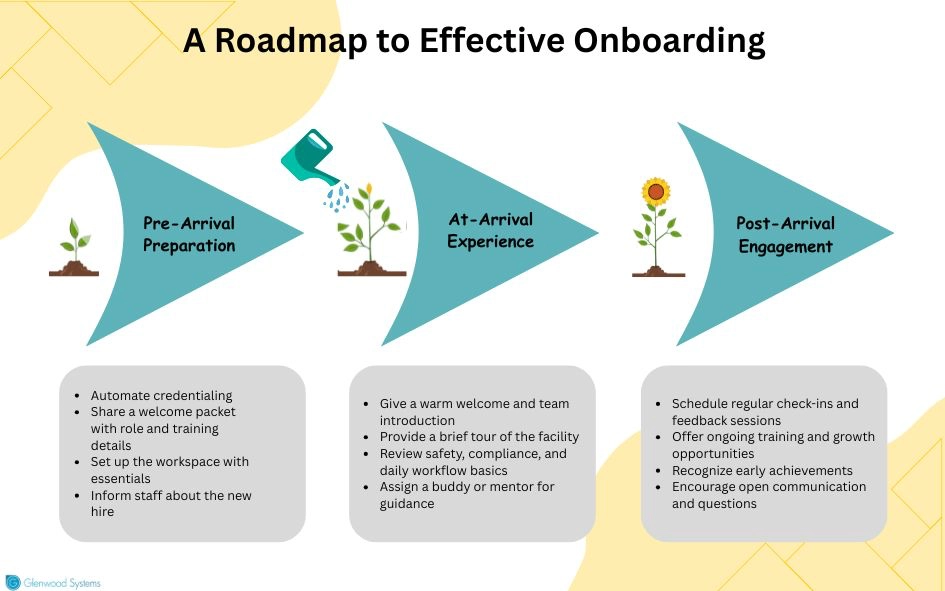
Exceptional employee onboarding is anchored in three vital touchpoints. Let’s break down each one and uncover the common missteps organizations should avoid along the way.
Each stage in the onboarding journey plays a defining role in shaping a new employee’s confidence and long-term engagement. Now, let’s walk through this roadmap to see how a thoughtful, structured approach can turn new hires into empowered, loyal team members.
Starting a new healthcare role brings a whirlwind of emotion; a mix of excitement, anticipation, and uncertainty that every professional feels at some point. Effective onboarding begins well before an employee steps through your doors. The pre-arrival stage sets the tone for everything that follows, easing uncertainty and laying the foundation for a long-term commitment.
Set the stage for a warm and welcoming start. Send a welcome packet that includes the employee handbook, role expectations, and a training or onboarding checklist outlining the schedule of their first few weeks. This simple gesture builds clarity and anticipation.
If you’re a small practice, even a thoughtful welcome email can make a lasting impression. Share a brief story about your practice’s history, mission, and values, along with the onboarding schedule. This personal touch helps new hires connect emotionally with your organization’s purpose before they meet the team.
Once an employee accepts the job offer, start the credentialing process immediately. Using automated credentialing systems significantly reduces administrative workload, flags missing documents early, and cuts turnaround times from weeks to just a few days. A smooth, timely credentialing process prevents delays and ensures your new hire is ready to step into their role without administrative hiccups.
At the same time, prepare their workspace with essentials such as a uniform, name badge, supplies, and logins, so everything’s in place on day one. Finally, inform your existing staff about the newcomer’s arrival and encourage them to extend a warm welcome.
A new hire’s first day can define their entire journey; it’s your chance to create a memorable and motivating start.
Begin their first day with a warm, personal welcome. Give a quick tour of the facility, introduce them to the team and key departments, and help them get comfortable with their surroundings. These simple gestures go a long way in easing first-day nerves and fostering connection.
To ensure your onboarding process is effective and consistent, focus on three key areas:
Reinforce Organizational Culture
Every organization has its own rhythm, its culture, and helping new hires tune in from day one is essential. When expectations and values don’t align, even the most talented professionals can feel out of place. Studies show that nearly 32% of employees quit their jobs in 2024 due to poor workplace culture, and more than half of newly graduated nurses left their first jobs for the very same reason.
Emphasizing workplace culture during onboarding helps bridge this gap. Revisit the employee handbook if you have one, but don’t limit your discussions to policies and procedures. Use this moment to communicate your mission, values, and the “why” behind your organization’s work; what makes your care unique, what your team stands for, and how everyone contributes to patient well-being.
Standardize Training
Training is where confidence takes root, which directly impacts patient safety, teamwork, and performance. A structured onboarding framework ensures that every new hire, regardless of their role, receives the same foundation of knowledge, support, and accountability.
Develop a standardized training checklist that aligns with your practice workflows and compliance requirements. This makes it easier for new hires to stay on track and for managers to monitor progress.
Here’s what to include:
Nurture Ongoing Dialogue and Trust
Engagement takes root where voices are heard, and conversations are transparent and honest. Schedule regular check-ins throughout the onboarding period to answer questions, address challenges, and celebrate progress.
Strong feedback loops are the heartbeat of effective onboarding. They keep engagement high, help leaders identify training gaps or workflow frustrations early, and provide valuable insights to refine the process for future hires.
Encourage two-way dialogue by asking what’s working, what feels overwhelming, and what additional support might help. Even a simple, genuine “How’s it going?” can make a world of difference. It signals that leadership is approachable, attentive, and invested in every individual’s growth.
Onboarding doesn’t end after the first day, or even the first week. Efficient onboarding is an ongoing process that can span 3-6 months, depending on the role and the organization. The goal during this period is to sustain momentum, strengthen confidence, and ensure new hires feel supported long after the initial excitement fades.
Keep the dialogue going by regularly collecting feedback from both the new hire and their mentor or supervisor. Likewise, recognize progress along the way and celebrate small, meaningful milestones, such as completing compliance modules, mastering a clinical workflow, achieving a patient care goal, or reaching the first 90-day mark. These gestures, though simple, make employees feel valued and keep them motivated.
Use feedback insights to refine your onboarding program. Adjust training content, timelines, or support systems to close skill and workflow gaps. Over time, this cycle of feedback and improvement builds a stronger, more confident workforce and a culture where employees don’t just stay longer, but thrive.
Employee Onboarding Strategies
You’ve got the map, now avoid the potholes. Here are a few onboarding pitfalls that can slow your journey to a confident, connected healthcare team.
Yes, you’re short-staffed and eager for your new hire to hit the ground running, but rushing onboarding often backfires. Compressing everything into a few intense days can leave new employees overwhelmed, anxious, and prone to errors. Instead, pace the process. Allow time for observation, hands-on practice, and gradual learning. This steady approach helps them build confidence and competence, two essentials for long-term success. Remember, slow onboarding is smart onboarding.
It’s tempting to cover everything at once, especially when you want your new hire to get up to speed quickly. But flooding them with information on day one can do more harm than good. Cognitive overload leads to confusion, poor retention, and frustration. Instead, pace their learning, focus on what’s immediately relevant, and gradually introduce the rest. Use structured checklists, digital onboarding tools, or short daily recaps to reinforce key points. This balanced approach keeps new hires engaged and confident, not buried under a mountain of details.
Not knowing what’s expected can quickly breed confusion, duplication of effort, and frustration. Clear communication about responsibilities, goals, and performance expectations is imperative. Be explicit about what success looks like, whether it’s patient care standards, documentation accuracy, or teamwork expectations. New employees also expect a clear roadmap to feel confident, perform better, and engage faster. Clarity sets direction, builds accountability, and trust.
For new hires, feedback is like a GPS; without it, they’re left guessing whether they’re heading in the right direction. When guidance is missing, small mistakes can snowball, and confidence can fade. Think of feedback as recharging a battery; it’s not a one-time event but a regular boost that keeps energy and motivation high. Schedule consistent check-ins to provide constructive input and recognize small wins along the way. Celebrating what’s going well and offering gentle course corrections ensures new hires stay focused, confident, and steadily moving toward success.
Onboarding a new employee is the clinical handover of a career. You wouldn’t send a new ICU nurse into a shift without a focused patient sign-over; the same principle applies here. Every new hire deserves a careful, structured transition that passes along not just information, but purpose, confidence, and culture. When onboarding is handled with the same diligence as a clinical handoff, it lays the foundation for safe, competent, and connected performance from day one.
Schedule a Free Consultation!


