The healthcare workforce crisis is still reeling from the aftershocks of the pandemic. The pandemic didn’t spark the crisis; it exposed and worsened it, and its impact lingers today.
Recruiting new staff to combat attrition might sound like a straightforward fix, but it's an unsustainable long-term strategy. Constantly hiring to backfill roles drains resources; it's an ongoing investment in advertising, onboarding, and training. Moreover, the hidden costs of employee turnover run even deeper: lost productivity, disrupted workflows, and knowledge erosion all take a toll.
In healthcare, employee retention must be a strategic priority. Preserving your existing talent base safeguards institutional expertise, fosters team cohesion, and reinforces a culture of continuity and stability. It’s also vital to ensuring operational resilience and driving consistent positive patient outcomes. Above all, robust retention efforts mitigate the financial strain of repeated recruitment cycles.
In this blog, we’ll explore why workforce retention is more critical than ever in today’s healthcare environment and uncover proven, practical strategies to help you strengthen workforce retention in 2025 and beyond.
Our healthcare system is facing escalating pressure as demand outpaces supply. This widening gap is driven by an increase in the aging population, particularly as more baby boomers enter the 65+ age group, coupled with persistent staffing shortages.
The Association of American Medical Colleges (AAMC) projects a shortage of up to 86,000 physicians by 2036, with workforce gaps expanding across nearly every specialty. Compounding the challenge, the unemployment rate remains low at 4.2% as of April 2025, highlighting the fierce competition for talent within a shrinking pool of qualified professionals. Hiring in today’s labor crunch is a costly challenge.
Meanwhile, rising chronic illness rates and a rapidly aging population (one in five Americans expected to be 65 or older by 2030) are fueling an unprecedented need for complex, continuous care. Employee attrition in this high-pressure healthcare setting can quickly destabilize care delivery, burden budgets, and fracture team dynamics. Employee retention is no longer a supportive strategy; it’s a critical pillar for sustaining care quality and financial resilience in an overburdened system.
Your workforce is more than just a headcount; it’s the foundation of your organization. You’ve poured your time, energy, and resources into building a reliable, skilled workforce. But when turnover starts to creep in, those efforts can quickly slip away.
The key is to be proactive. Focusing on employee-first strategies retains top talent and strengthens your care delivery from the inside out. Here are six essential employee retention strategies every healthcare organization should focus on in 2025.
An actively engaged employee invests emotionally in your mission, values, and goals. A recent survey by Hallmark reveals that nearly 90% of healthcare leaders believe staff engagement has a direct impact on patient satisfaction and clinical outcomes.
In healthcare, the emotional and physical demands are intense, and the stakes are life and death, which makes engagement even more critical. A disengaged team can lead to burnout, errors, and high turnover, while an engaged workforce is equipped to manage stress and deliver consistent, high-quality care.
Here’s how to foster collaboration and enhance employee engagement:

Tips to Improve Employee Engagement
Nothing drives disengagement like a stagnant career path. Healthcare is a dynamic field where new diseases emerge, treatment protocols evolve, and technology constantly advances. Continuous learning and skill development are imperative to stay relevant, confident, and efficient.
Invest in role-specific training programs, such as clinical certifications, hands-on workshops, and continuing medical education (CME) courses, to support long-term growth. Encouraging ongoing education empowers staff to sharpen their skills, stay current with industry standards, and reinforce professional confidence.
Take it a step further by fostering cross-training and interdisciplinary collaboration. Developing a more versatile and responsive workforce prepares your team to pivot efficiently during surges in demand, enhances adaptability, strengthens team cohesion, and reduces employee burnout. Investing in growth sharpens your clinical edge and signals you value your team’s future. And that kind of investment pays off; it elevates morale, builds long-term loyalty, and makes your organization a place where people want to stay and grow.
The current labor market is tight, and healthcare professionals have more choices than ever. Employees won’t stick around if they feel invisible or undervalued. To attract and retain top talent, a competitive and well-rounded compensation package is non-negotiable.
Don’t let your pay fall behind. Skimping on compensation is a fast track to higher turnover. Regularly evaluate your compensation structure to stay aligned with industry benchmarks.
But salary alone doesn’t make a compelling offer. A well-rounded benefits package that reflects the diverse demographics of your workforce significantly boosts employee retention. Consider going beyond basic health insurance to include:
Burnout may have eased since the height of the pandemic, but it’s far from over. Current levels remain higher than pre-pandemic benchmarks, with nearly two-thirds of nurses and half of physicians still reporting symptoms of burnout. A Medscape report further highlights the crisis, revealing that 1 in 5 physicians are depressed, emphasizing the critical need for systemic support and intervention. The leading culprits? Excessive administrative workloads, limited control over scheduling, and a lack of organizational support.
Unchecked burnout creates a ripple effect — it erodes morale, drives up turnover, compromises care quality, and fractures team dynamics. Proactive burnout management is pivotal in retaining top talent. Burnout doesn’t stand a chance with these strategies in place:
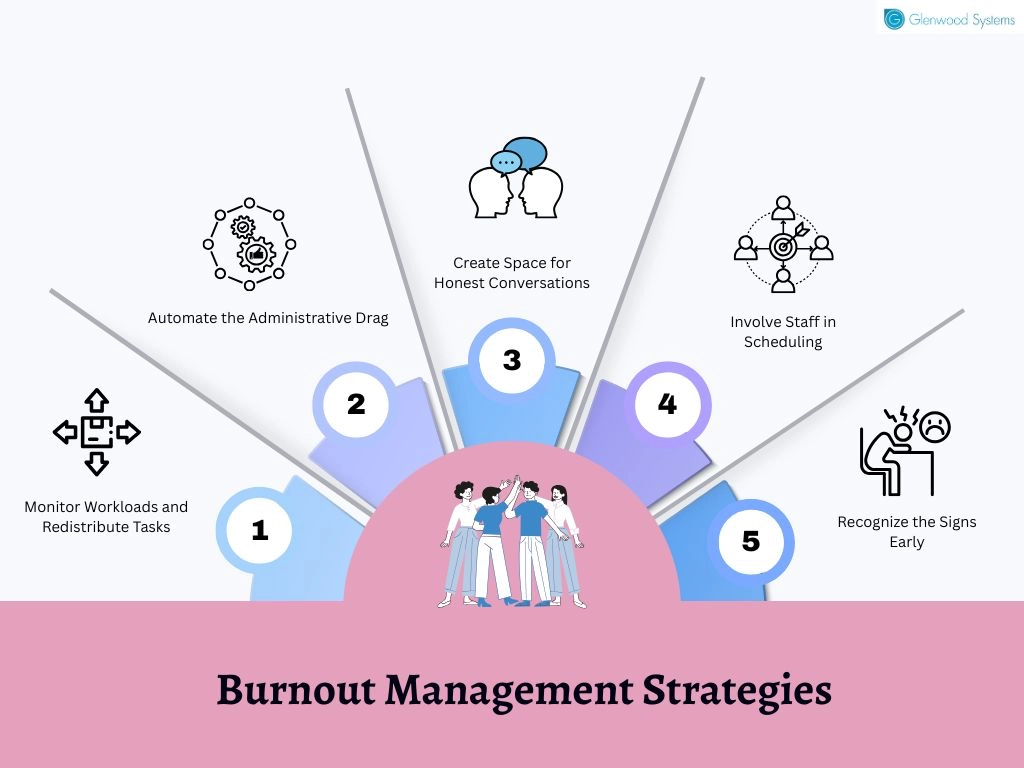
Employee Burnout Management Strategies
The medical profession demands both cognitive precision and physical resiliency; sidelining staff well-being creates the perfect storm for emotional fatigue and attrition.
True wellness goes beyond the occasional wellness day or health seminar. It’s about fostering a culture that supports holistic well-being.
Integrate well-being into the rhythm of everyday operations. Encourage mindfulness practices, provide space for short mental resets, and offer resilience-building activities that help cope with the emotional weight of patient care. Normalize conversations about mental health and emotional fatigue.
Moreover, offer confidential psychological support, such as therapy sessions, peer support groups, stress-reduction workshops, and Employee Assistance Programs (EAPs) for ongoing mental health support. Flexible scheduling, adequate time off, and wellness challenges help create a more energized, committed, and compassionate workforce.
The pandemic permanently reshaped the way work is perceived and delivered. Today’s professionals place a high premium on roles that offer better work-life balance, personal autonomy, and scheduling flexibility. Rigid shifts, unpredictable hours, and poor scheduling control drive capable, experienced staff toward burnout or out of the industry entirely.
Flexibility isn’t just a perk anymore. Nearly 8 in 10 healthcare leaders report that flexible work models improve employee engagement, and 9 in 10 say it directly enhances the quality of care delivered. Additionally, over the past two years, nearly all healthcare leaders experienced a rise in demand, particularly from nurses, for gig-style or more customizable work arrangements.
It's time to weave flexibility into your workforce strategy. For clinical staff, this could mean leveraging self-scheduling tools, implementing equitable shift rotations, and offering part-time opportunities. For administrative and non-clinical roles, hybrid or remote work can significantly boost job satisfaction.
Technology is a key enabler here. From intelligent scheduling platforms to telehealth solutions and real-time communication tools, these advanced systems implement flexibility without compromising efficiency.
Healthcare workforce shortages have long been a reality, but what makes today’s situation especially alarming is the rapidly aging population with increasingly complex medical needs, coupled with a shrinking pool of qualified professionals. It’s a perfect storm!
You can’t hire your way out of a workforce crisis; lasting solutions start with retention. Glenwood Systems offers a suite of practice management tools that help alleviate employee burden, enhance efficiency, and facilitate retention. Prioritizing employee-centered strategies fosters a culture where staff feel valued, supported, and inspired to stay.
Schedule a Free Consultation!


