Not too long ago, choosing a doctor was simple; you’d ask a trusted friend, a family member, or maybe the neighbor down the street. That personal referral carried weight and often shaped the decision.
Fast forward to today...things look very different. Social platforms and AI tools have become the go-to companion for answers, the first stop and often the final word. Patients open Google or ask ChatGPT before they open the clinic door. They scroll through reviews, compare ratings, and cross-check multiple social platforms before deciding which doctor to trust.
Online reviews have become a deciding factor: 71% of people rely on them to find a new doctor, and 90% judge a provider based on what they read.
And negative reviews? They’re like a microphone for dissatisfaction, amplifying a single voice into something much louder. A practice’s digital footprint now anchors patient trust and drives growth. Word-of-mouth isn't dead; it lives online, where reviews and ratings shape perceptions 24/7.
Online reputation management (ORM) is the new lifeline of modern medical practice. It shapes how patients perceive you, influences their decisions, and ultimately drives patient acquisition.
Let’s explore why online reputation matters more than ever, how AI is changing the game of reputation management, the risks that come with it, and the strategies you can use to harness AI effectively.
In any business, trust and credibility are the ultimate currency that drives long-term success. But today, it’s often measured in star ratings and patient reviews.
Reputation management is about shaping how people see your practice. In this digital age, it means monitoring patient reviews, responding with empathy, and using feedback as an opportunity to strengthen trust.
The core principle of reputation management hasn’t changed; it’s still about enhancing credibility and building trust. What has changed is the speed of perception. Reputation management has shifted from a slow, reactive process to a fast-paced, proactive one. Today, a single negative tweet or post can spread like wildfire within minutes, undermining years of carefully built trust. Timely monitoring, quick responses, and proactive engagement are pivotal in safeguarding your practice reputation.
Patients now approach the process of choosing a doctor with the same diligence they use when booking hotels or restaurants: reading reviews, comparing options, and weighing trust signals.
The 2024 Zocdoc Patient Experience Report found that patients view an average of 26 provider profiles before booking an appointment. That means competition for patient attention is fierce, and reputation is a deciding factor.
So, what actually drives their decision? Recent reports from RepuGen and Zocdoc paint a clear picture:
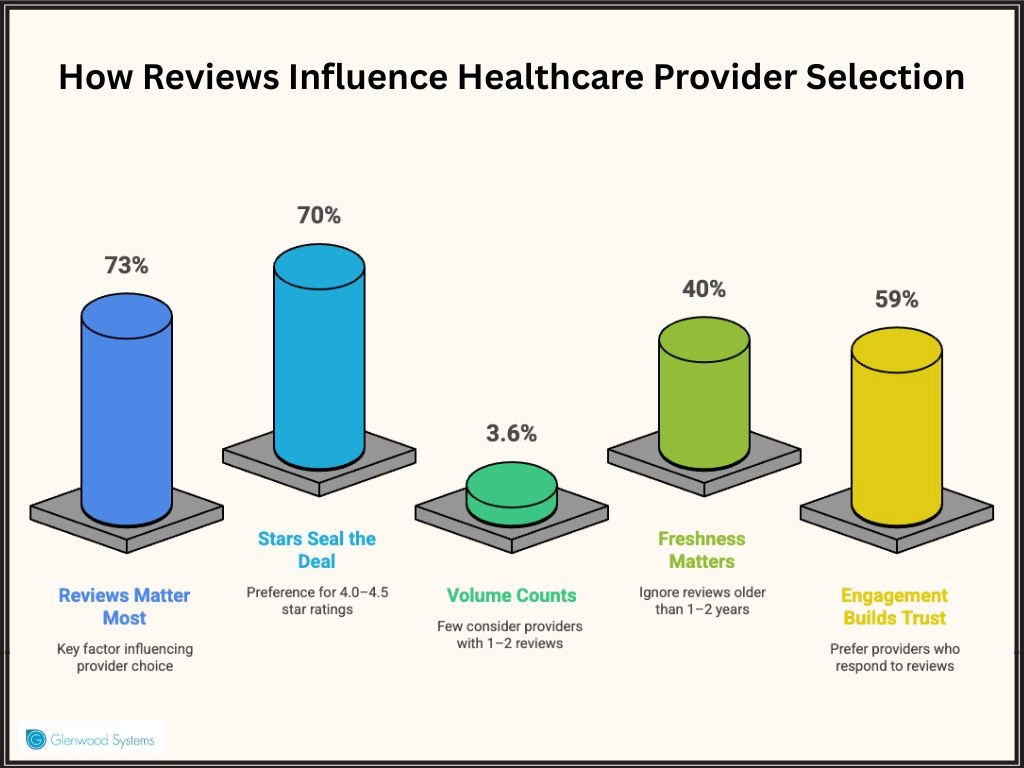
Impact of Patient Reviews
Patients are looking for the most trusted physician. Reviews influence perceived expertise, care quality, trust, and determine who wins the appointment. However, equally important is consistency, responsiveness, and visibility across multiple platforms
Traditional reputation management relies almost entirely on human teams that monitor reviews, draft responses, and track patient sentiment across multiple platforms. The work is labor-intensive and often slowed down by inevitable delays. Online reputation management, however, is highly time-sensitive: a delayed response to a negative review can quickly escalate, magnifying the damage before a practice even has the chance to intervene.
AI has put online reputation management on fast-forward, giving practices the speed and scalability they need to keep up with today’s digital pace. What used to take days now happens in real-time. Instead of scrambling to repair damage, AI allows practices to take a proactive stance, staying one step ahead of patient perception. Here’s how:
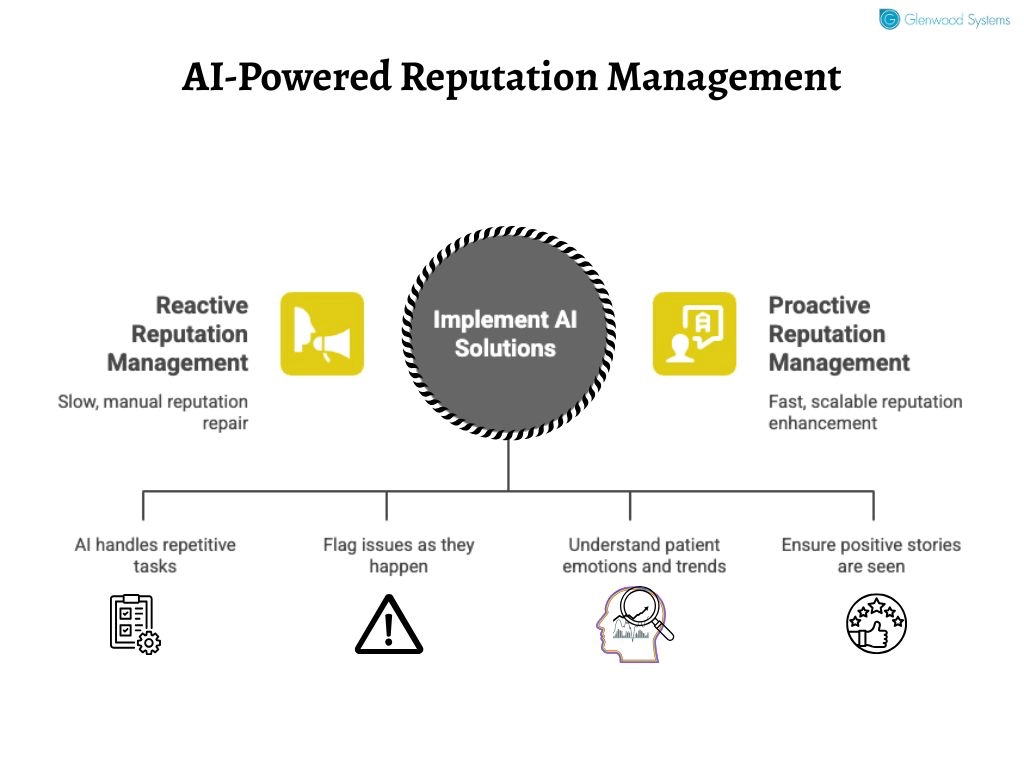
AI-Powered Reputation Management
AI's advent has been like a double-edged scalpel, remarkably precise and powerful, yet capable of cutting the wrong way. Its ability to monitor reviews, detect trends, and even craft responses has brought unprecedented efficiency to reputation management.
Yet in healthcare, there’s no room for error. Patients expect accuracy, empathy, and personal attention, and even with AI on your side, there are key challenges that can impact trust:
A strong positive reputation is anchored in trust, and trust is earned through clarity and accuracy. While AI-powered chatbots promise 24/7 support, they can sometimes do more harm than good. A study by RingCentral found that 70.5% of users get frustrated when they have to repeat themselves multiple times with chatbots, and 55.7% struggle to escalate their concerns to a live agent. These breakdowns create friction and impact patient trust and your reputation.
Moreover, even the slightest glitch in an AI chatbot can snowball, spreading misinformation, offering incorrect guidance, or downplaying the urgency of a patient’s concern. Errors like these erode patient trust and raise compliance risks.
AI's ability to process data is profound, but it struggles with the subtleties of human emotion. It often lacks the warmth and human touch that patients value. Automated replies may check the box for speed, but if they sound scripted or generic, they feel impersonal, making patients question whether they’re truly being heard. A missed emotional cue or a tone-deaf response from an AI system can be dismissive, leaving patients unsatisfied and less likely to trust the practice.
AI-generated deepfakes are an emerging threat to healthcare reputations. From manipulated videos to fabricated statements, these hyperrealistic creations can spread faster than the truth, tarnishing credibility before a practice even has time to respond. They can impersonate physicians, staff, or entire organizations, misleading patients, fueling distrust, and creating confusion. The fallout goes beyond a tarnished reputation; it can trigger legal, regulatory, and financial consequences that leave lasting scars.
AI is your ally; it only becomes a foe if left unchecked. The future of healthcare reputation management is undeniably tied to AI, and while risks exist, they shouldn’t stop us from tapping into its full potential. AI has redefined how practices monitor, respond to, and shape their online reputations. Yet its real power comes not from automation, but from its thoughtful and strategic use.
AI works best when guided with intention. Reinforce your reputation management with:
Automation speeds up response rates, but speed alone isn’t enough. Generic, copy-paste replies feel cold and impersonal, leaving patients frustrated rather than reassured.
Customize AI-generated responses so they resonate with each patient’s unique concern. Adjust tone and language to reflect the sentiment of the review, whether it’s showing empathy for complaints or appreciation for praise. Incorporate specific details from the feedback to feel genuinely heard, not dismissed. Furthermore, maintain consistency in messaging across platforms while preserving the human touch that builds trust.
AI chatbots are powerful allies for quick answers and 24/7 support, but they come with risks. One of the biggest concerns is “hallucinations,” when the system generates fabricated or inaccurate responses that sound convincing. When dealing with patients, accuracy is non-negotiable; even a small error can become life-threatening, erode trust, and expose practices to liability. Roll out AI chatbots only after thorough vetting:
AI is powerful, but far from flawless. Regular audits are vital to ensure chatbot interactions, automated communications, and other AI-generated outputs are accurate, compliant, and empathetic. Without oversight, even minute errors can snowball into misinformation, patient dissatisfaction, or compliance violations.
AI has fueled the rise of deepfakes. A study by Regula found that businesses across industries lost an average of $450,000 in 2024 due to deepfake-related fraud and reputational damage.
The good news? You can fight AI with AI. Healthcare providers can use AI-powered detection tools that scan for red flags, including pixel inconsistencies, metadata anomalies, or unnatural tone patterns. Agentic AI is stepping up as a watchdog, spotting deepfakes and flagging risks before they tarnish a brand’s reputation.
If there’s one thing that you can never compromise in healthcare, it’s the human touch. Patients expect empathy, reassurance, and understanding, not just information. A balanced approach, where AI handles repetitive, high-volume tasks while your team steps in to address sensitive situations with care and authenticity, helps turn criticism into credibility.
Reputation isn’t built overnight, and criticism doesn’t have to derail your practice. AI is a powerful ally in strengthening your reputation, but only when used thoughtfully and wisely. At the heart of it all, patients are looking for a trusted partner who listens, values their concerns, and responds with genuine care. Nurture that trust, and your reputation evolves from something you manage to something patients believe in.
Glenwood Systems is your ally in building trust that lasts. With GlaceGrow, we don’t just monitor your reputation; we help you actively shape it. From keeping your Google Business listing accurate and up-to-date to tracking and responding to reviews with empathy to sending timely review requests that spark positive feedback, we ensure every patient feels heard and valued. With the right blend of innovative tools and hands-on support, we turn criticism into credibility and trust into lasting growth.
Your patients are already talking; let’s make sure what they say builds your reputation, not breaks it.
Schedule a Free Consultation!


