Healthcare access in the United States remains a concern. The 2025 Survey of Physician Appointment Wait Times reports that scheduling an appointment became 19% slower in 2024, with patients waiting an average of 31 days to see a physician in 15 of the nation’s largest metropolitan areas.
Now imagine a scenario where, after waiting an entire month to secure an appointment, a patient finally arrives at your office, only to spend another 30 to 45 minutes sitting in the waiting room. How many patients would stay loyal after that wait?
Research shows that patient satisfaction drops the longer a person waits, and negatively impacts loyalty.
Of course, broader challenges, such as rising demand and a national staffing shortage, are beyond the control of most private practices. But what is within your reach is reducing the wait inside your own office. Cutting down long wait times at the practice level isn’t impossible.
The question is, how do you actually make this happen in your practice? Here are a few practical, cost-effective strategies that reduce long wait times, enhance the patient experience, and strengthen your reputation without overburdening your staff or budget. Let’s walk you through.
Being stuck in a busy waiting room can test anyone’s patience. A virtual queue allows patients to check in remotely and wait from their car, office, or even home until their exam room is ready. This simple change is a win-win: it reduces waiting-room congestion while providing patients with comfort and autonomy.
AI takes this system several steps further. Instead of staff manually managing the queue, AI can accurately predict provider availability and automatically notify patients in real time. For example, if a physician is running 10 minutes late, the system can send a text alert, saving the patient from unnecessary idle time in the waiting room.
Virtual queuing systems can also integrate with online scheduling and digital intake to provide a seamless patient experience. A streamlined check-in reduces stress on front-desk teams, minimizes bottlenecks, and sets a positive first impression the moment the patient arrives.
Most patients want to take charge of their health and prefer online scheduling. Self-scheduling empowers patients to book online at their preferred time, enhancing convenience while significantly reducing no-shows. However, a complicated scheduling system without real-time data can discourage use and undermine these benefits. To optimize self-scheduling, keep the process simple, intuitive, and seamless, so patients can book effortlessly while your practice enjoys smoother operations and fewer missed appointments.
Integrating AI into your scheduling platform gives your practice a clear edge. It analyzes historical data, optimizes your calendar, and enhances productivity. AI scheduling systems can:
Together, these capabilities help maintain a full yet manageable calendar, improve patient access, and reduce administrative burden.
Paper forms remain one of the biggest culprits behind delays. Collecting detailed patient information is vital for accurate diagnosis and clean claim submission, but paper-based processes often create a frustrating bottleneck.
A recent report by Smart Communications warns that nearly two-thirds of patients, particularly Millennials and Gen Z, could walk away from providers with outdated or onerous intake processes.
Digital intake forms address this challenge. Instead of wrestling with paper, patients can complete documentation before their visit. This minor yet impactful shift saves valuable minutes at check-in, accelerates visits, and creates a smoother patient experience. Moreover, this convenience pays off: when the intake process feels effortless, half of your patients are more likely to leave a positive review and recommend your practice. A seamless check-in starts with forms that are:
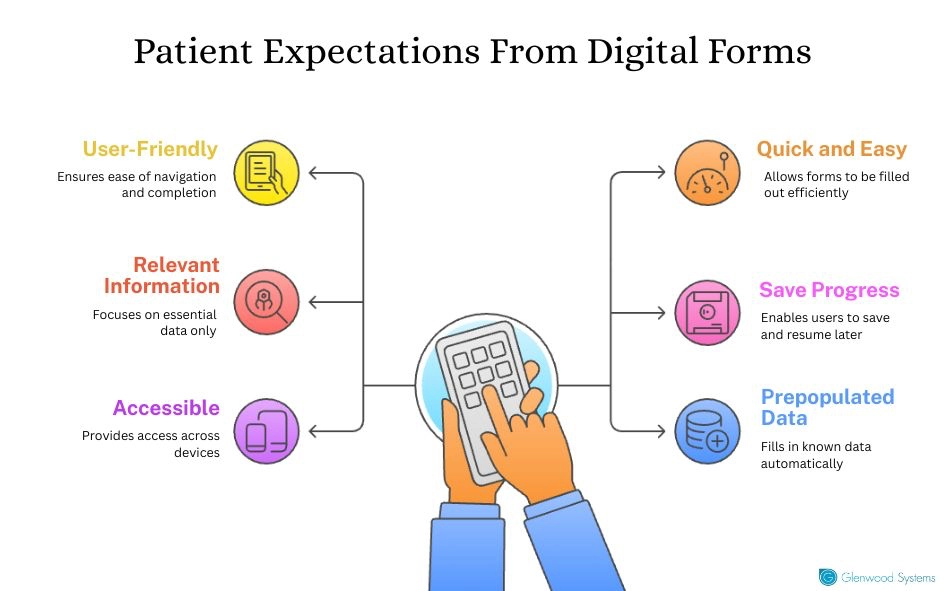
What Patients Expect From Digital Forms
Timely access to care is critical; delays can increase risk or compromise patient outcomes. A strong triage system ensures patients are routed to the right level of care, whether that’s an emergency room, an advanced practice provider, or even a telehealth consult.
But manual triage often slows things down even further; AI is the intelligent alternative. Using natural language processing (NLP), AI triage assistants can analyze patient-reported symptoms submitted through chatbots, portals, or online forms. Instead of staff spending hours sorting through calls, AI can assess symptoms in real time, flag emergencies for immediate attention, and guide patients to the appropriate care channel.
Furthermore, AI supports clinicians in clinical diagnosis and flags the need for hospital admissions based on preliminary triage, saving valuable time during the encounter.
Nobody likes feeling out of the loop. Effective communication can reduce the uncertainty and frustration caused by delays. Providing proactive updates on expected wait times, schedule changes, or alternative options goes a long way in building trust and enhancing the patient experience. A trustworthy provider responds promptly, and 9 in 10 patients say that timely communication strongly influences their confidence in a practice.
AI-powered platforms make communication effortless. They reduce the burden of phone calls and emails by automatically sending updates via text messages, email, or push notifications.
When patients face waits of up to a month for an appointment, the risk of no-shows rises. AI can send timely reminders, share preparation instructions, and provide real-time updates if a provider is running behind, which keeps patients informed and engaged throughout their journey.
Not every appointment requires an in-person visit. Routine check-ins, medication refills, behavioral health sessions, and follow-ups can be handled virtually, freeing up clinic slots for patients who need physical exams.
Telehealth is also ideal for patients with minor health concerns or transportation challenges, as it offers greater flexibility, reduces travel time, and shortens wait times. Integrating telehealth into your scheduling improves patient satisfaction, keeps care on track, and optimizes your schedule to accommodate more patients.
AI-powered technology mitigates the time-consuming and tedious administrative burden. Integrating the right tools into your workflow reduces staff burden, improves accuracy, and shortens patient wait times. While no system can eliminate every delay, several technologies can make a noticeable difference:
The length of a patient visit often depends on the nature of the appointment. For instance, a new-patient consultation can take 20–30 minutes to discuss concerns, establish a diagnosis, and outline a treatment plan, whereas a routine follow-up is often much quicker. Structuring appointments based on visit type prevents bottlenecks and delays.
An overbooked calendar might seem like a smart way to keep slots full, but it often has the opposite effect; it increases wait times. Building in short buffer periods between visits is just as important. These gaps create flexibility to accommodate emergencies, late arrivals, or unexpectedly long consultations without derailing the entire schedule.
Here too, AI can help. By analyzing patient flow trends and visit types, AI can recommend optimal spacing, anticipate which appointments may run long, and automatically adjust buffer times. Gradually, the system learns from patterns and continuously fine-tunes scheduling, creating a more balanced and predictable day.
No two days in a practice ever look the same. Seasonal surges, flu waves, or even unexpected local events can quickly overwhelm practices. Forecasting demand means adapting in real-time and planning for additional capacity.
AI plays a key role here. It can detect sudden spikes in demand and optimize schedules based on medical staff and resource availability. By analyzing historical appointment patterns, local health trends, and even public health reports, AI provides early warnings of potential bottlenecks. With these insights, practices can proactively adjust staffing, extend hours, or expand telehealth coverage to maintain steady patient flow and prevent backlogs.
Beyond scheduling, AI also strengthens practice operations by:
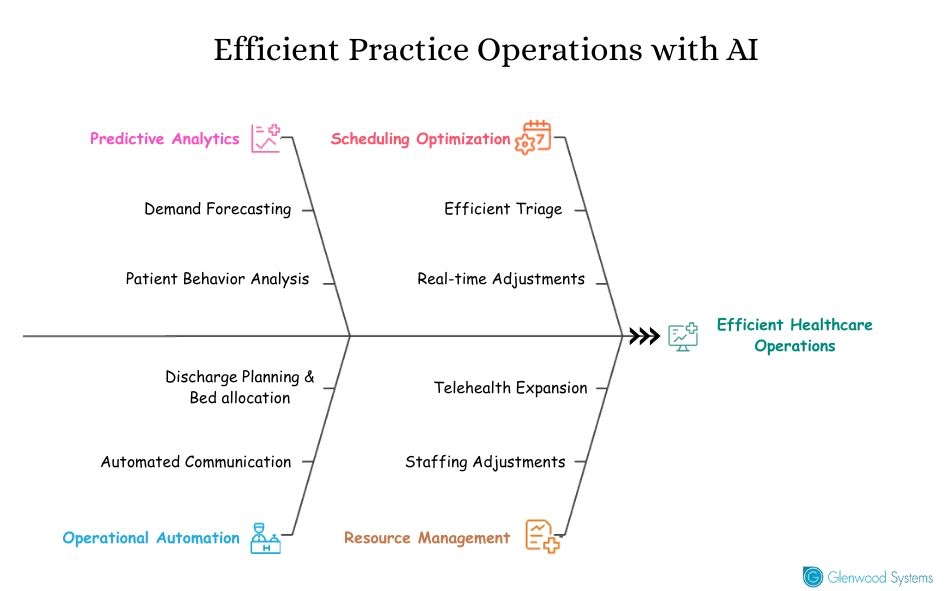
Enhancing Practice Operations with AI
AI helps run your practice more efficiently, reduce delays, and deliver timely care.
Every step toward excellence starts with measurement, and patient wait times are no exception. Unless you consistently track average wait times and in-office delays, the real causes will stay hidden. Regular monitoring ensures accountability and keeps performance on track.
On paper, tracking wait times sounds straightforward. But behind the scenes, you’re dealing with thousands of data points that can easily blur together without the right tools. AI-powered RCM dashboards simplify the chaos, transforming raw data into clear, actionable insights. Here’s what they make possible:
Clear insights work like an X-ray, revealing what’s really happening beneath the surface. AI uncovers hidden inefficiencies, fixes what matters most, and ultimately delivers a smoother, more satisfying patient experience.
Long wait times create inconvenience, reduce satisfaction, weaken loyalty, and can harm your practice’s reputation. Turn administrative chaos into smooth, efficient workflows with Glenwood’s advanced practice management solutions.
Features such as instant eligibility checks, hands-free documentation, and intelligent scheduling cut administrative bottlenecks and streamline patient flow. Combined with automated reminders, digital intake forms, and AI-assisted scheduling, your appointments start on time and run efficiently.
End the Wait. Start the Care.
Want to learn how Glenwood Systems can help? Schedule a demo today.
Schedule a Free Consultation!


