Great patient outcomes alone no longer guarantee maximum reimbursement. Reimbursement also depends on how accurately you report quality measures and keep pace with evolving performance requirements.
For years, MIPS has been critical to determining whether physicians receive positive payment adjustments, penalties, or neutral reimbursements under Medicare’s performance-based payment model.
But even after almost a decade, MIPS still overwhelms many providers and practices. Reporting requirements continue to evolve, administrative workloads grow, and documentation demands add pressure to already busy practices.
Yet MIPS cannot be ignored. Performance scores directly affect reimbursement and significantly impact a practice’s financial performance.
Let's break down what MIPS is, what’s changing in 2026, and practical ways to improve your MIPS scores without adding unnecessary administrative burden.
Medicare reimbursement was restructured under the Quality Payment Program (QPP) by the Medicare Access and CHIP Reauthorization Act (MACRA). The goal was to shift from volume-based reimbursement to a performance-based model that ties payments to the quality and efficiency of care delivered.
Under QPP, clinicians can participate through two primary reporting pathways:
MIPS, or the Merit-Based Incentive Payment System, is one of the main reporting tracks under QPP. It consolidates traditional Medicare reporting programs, including PQRS, the Value-Based Payment Modifier, and the Medicare EHR Incentive Program (Meaningful Use), into a single unified reporting framework.
Physicians participating in the MIPS program receive a Medicare payment adjustment based on their overall MIPS performance score. The score typically ranges from 0 to 100 and is calculated across four performance categories, each weighted differently toward the final score.
The four MIPS performance categories include:
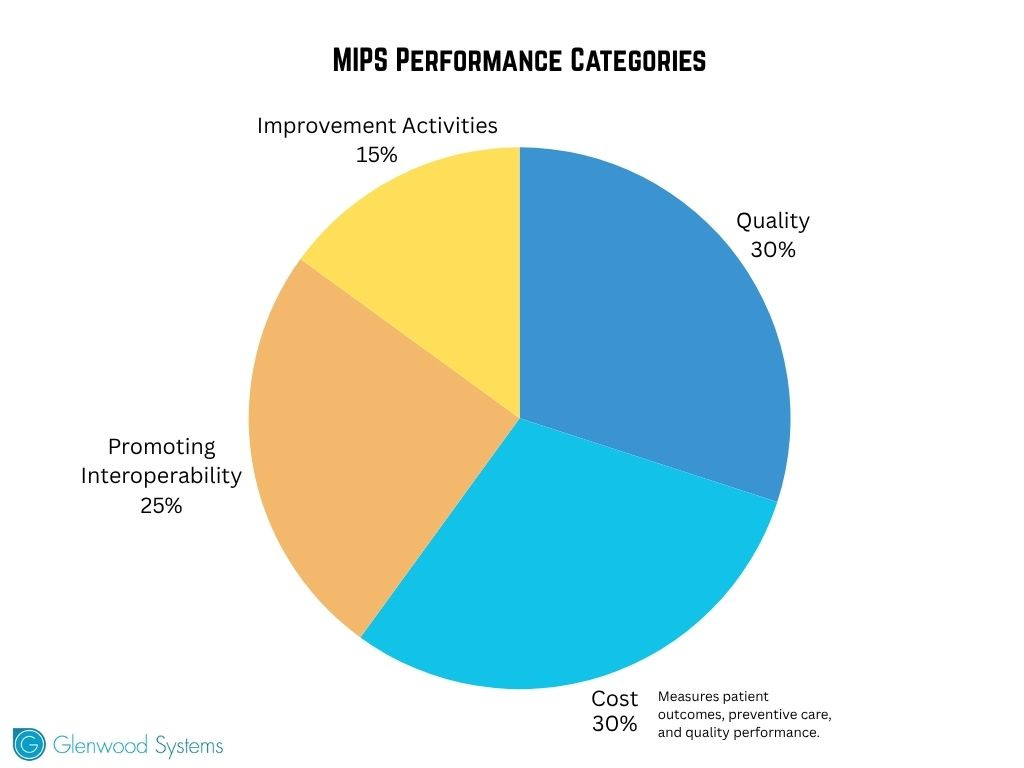
Once the final MIPS score is calculated, it’s compared with the performance threshold to determine whether a clinician receives higher Medicare reimbursement, a payment penalty, or no adjustment.
In 2026, the threshold remains at 75 points, and payment adjustments range from +9% to -9% based on overall performance.
Physicians can participate in MIPS individually, as part of a group or virtual group, or, in certain cases, through an APM entity. However, you may be exempt from MIPS if:
Every year, MIPS evolves a little, and 2026 is no exception.
Some updates are subtle, while others directly affect reporting workflows, documentation requirements, and reimbursements. Here’s a simplified breakdown of what providers should watch for to in the 2026 MIPS performance year:
The Quality category will include 187 quality measures in 2026, with:
Because availability may vary by specialty, practices should verify whether their preferred measures are active before building their reporting strategy.
CMS has included 100 activities for 2026, with:
Another notable change is the replacement of the “Achieving Health Equity” subcategory with the broader “Advancing Health and Wellness” category, reflecting a shift toward more proactive and preventive healthcare strategies.
Several updates in this category aim to strengthen data security and improve reporting flexibility.
In 2026:
The cost category remains largely unchanged for 2026. However, CMS has updated the Total Per Capita Cost (TPCC) methodology to improve cost attribution accuracy.
CMS is also introducing a two-year informational-only feedback period for newly finalized cost measures in future performance years, giving providers more time to understand performance impacts before payment adjustments are applied.
CMS continues to encourage providers to transition to MVPs for more specialty-focused reporting.
In 2026, 27 MVPs are available for reporting, including 6 new ones:
MIPS was introduced to improve care quality and align physician reimbursement more closely with performance and patient outcomes. While the objective is well-intentioned, meeting MIPS requirements has become increasingly complex for many practices.
As reporting requirements change, many practices face operational, administrative, and technology-related barriers that affect MIPS performance and reimbursement.
Here are some of the most common MIPS challenges providers face:
One of the biggest MIPS challenges providers face is keeping up with evolving CMS requirements. Performance thresholds, quality measures, reporting standards, and scoring methodologies are frequently updated. Staying current requires continuous monitoring, and many practices struggle to keep pace with compliance expectations.
The MIPS performance score depends heavily on the quality measures physicians choose. However, many specialists feel that MIPS still lacks enough clinically relevant measures tailored to their specific area of practice.
As a result, providers often struggle to identify measures that align with their specialty, patient population, and existing workflows. While some measures may appear attractive on paper, they’re often difficult to document and report consistently in real-world clinical settings. This confusion during measure selection leads practices to choose measures that limit scoring opportunities, weaken performance, or result in missed reporting requirements.
MIPS reporting is time-consuming and resource-intensive. On average, physicians spend more than 200 hours and approximately $12,811 annually on MIPS-related activities.
Tracking quality measures, maintaining accurate documentation, managing reporting timelines, and coordinating across teams all require significant time and operational effort. Smaller practices with limited staff and resources often struggle to manage the growing administrative burden.
Accurate MIPS reporting depends on data quality. Yes many small practices still rely on disconnected systems, with EHRs, billing platforms, and reporting tools operating in silos. This fragmentation can hinder data exchange, increase manual work, and lead to errors.
Inconsistent workflows, limited interoperability, and incomplete data capture heighten the risk of reporting errors and compromise data quality. Over time, these gaps directly affect MIPS performance scores, reimbursement outcomes, and overall reporting efficiency.
MIPS reporting requires consistent documentation, accurate coding, and ongoing performance tracking. Many practices struggle to monitor performance consistently, maintain comprehensive documentation, validate data, and meet reporting deadlines.
Over time, these gaps lower performance scores, leading to missed incentive opportunities, reimbursement losses, and increased audit risk.
We’ve discussed the common challenges providers face with MIPS reporting. The good news is that many of these challenges are preventable with the right approach. Here are practical strategies to improve MIPS performance and scoring outcomes.
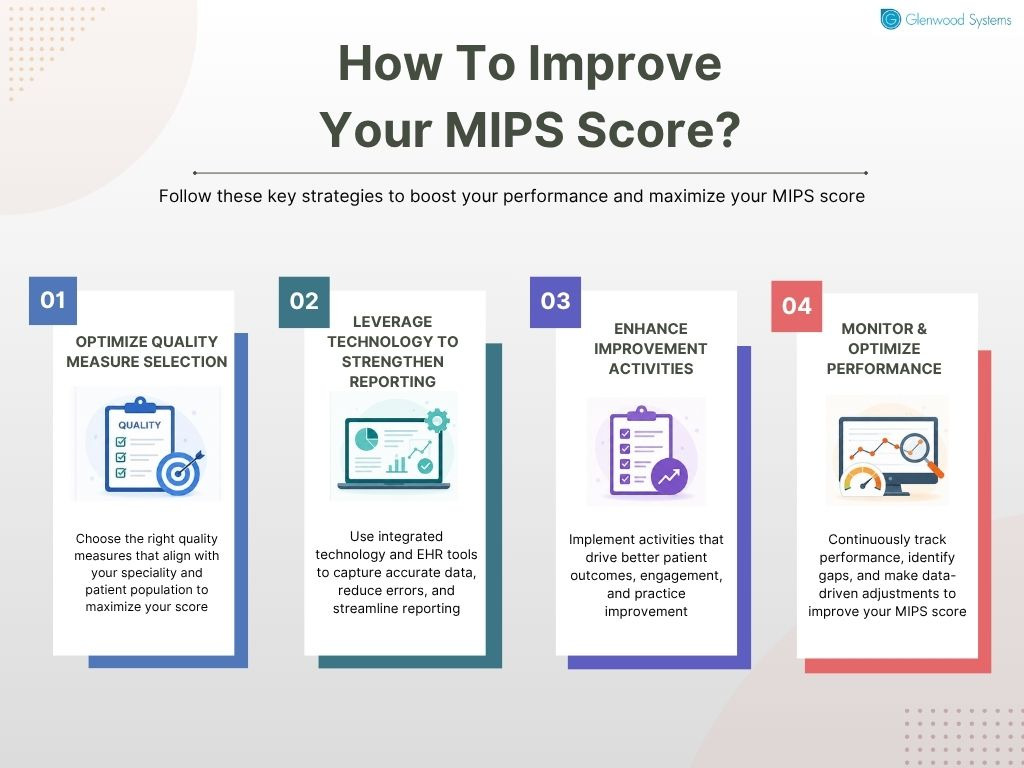
Quality measures vary across specialties and practice types. It's critical to choose measures that align with your specialty, patient population, and operational workflows. Selecting the right measures makes reporting, data capture, and documentation easier and more manageable.
Furthermore, quality measures are volatile. CMS may update, remove, or replace measures from one performance year to the next. Practices should regularly review annual CMS updates to ensure previously reported measures remain active, relevant, and applicable to their specialty.
For example, a dermatology practice may achieve stronger performance with measures focused on skin cancer screening, lesion follow-up, or biopsy documentation rather than broader preventive measures that may not consistently apply to its patient population.
Technology has significantly streamlined MIPS reporting and reduced the administrative burden. Leverage EHRs, registries, and reporting platforms to automate data capture, minimize manual entry, and improve reporting consistency across providers and locations.
However, if these systems operate in silos, data gaps and workflow inefficiencies reduce reporting accuracy. Prioritize system integration and interoperability to ensure seamless data exchange and more reliable reporting.
Automating time-consuming tasks such as documentation, quality tracking, and performance monitoring significantly improves reporting efficiency and accuracy. Features such as templates, prompts, dashboards, automated alerts, and real-time performance tracking help capture the right information at the point of care and reduce missed reporting opportunities.
Technology also provides better visibility into performance throughout the reporting period, allowing you to identify gaps, address workflow issues, and make more informed reporting decisions before submission deadlines.
Improvement Activities offer a valuable opportunity to strengthen MIPS scores with a relatively lower reporting burden than other performance categories. For group practices, achieving full credit in the Improvement Activities category often requires completing 2 activities. However, at least 50% of clinicians in the group must perform the same activity for at least 90 days to receive credit.
The key is to select activities that naturally align with existing clinical workflows rather than adding entirely new administrative processes. Choosing practical, sustainable activities makes reporting easier, improves compliance, and reduces staff burden over time.
Prioritize activities that support:
Effective MIPS reporting management is not about getting everything perfect on the first try. Long-term success comes from continuous monitoring, timely adjustments, and ongoing optimization throughout the reporting period.
Many practices wait until reporting deadlines approach to review performance data. By then, correcting documentation gaps, workflow issues, or underperforming measures is impossible.
Consistent performance monitoring helps practices:
Regular audits, real-time dashboards, and ongoing performance reviews provide better visibility into reporting accuracy, helping you strengthen your overall MIPS performance over time.
The right technology infrastructure makes MIPS reporting and compliance far more manageable. With a longstanding presence in healthcare technology, Glenwood Systems delivers streamlined workflows, reduces administrative burden, and improves practice efficiency.
Our suite of practice management solutions simplifies data capture, strengthens interoperability, and optimizes reporting workflows to support accurate, efficient MIPS reporting. GlaceEMR and GlaceScribe facilitate comprehensive documentation, support compliant reporting, and ensure clinical data is captured consistently at the point of care.
Let’s connect to lighten your compliance workload.
Schedule a Free Consultation!


