

Denials are frustrating, but the bigger challenge is their recurrence.
For many practices, denial management feels like running on a hamster wheel: reworking claims, chasing appeals, and still watching the same denials resurface.
Top-performing organizations, however, have a different approach to tackling denials. They’re not immune to them, but instead of constantly reacting, they focus on structured processes and root-cause prevention.
If your process feels reactive, it may be time to rethink your strategy. Here’s why a strong denial management workflow matters and how to build one.
Why Denial Management Is Critical for Medical Practices in the U.S.?
Providers sometimes see denials as a time- and energy-drainer. But ignoring denials doesn’t eliminate the problem; it erodes your revenue.
The numbers make that hard to ignore.
- Over 41% of healthcare providers report denial rates of 10% or more.
- A recent KFF report found that 19% of in-network claims and 37% of out-of-network claims were denied in 2024.
Nevertheless, taking action speaks volumes: nearly 81% of appealed prior authorization denials were partially or fully overturned in 2024. And this isn’t a one-off trend; it has been consistent since 2019.
Denials are not the end; they’re recoverable revenue if you choose to pursue them effectively.
How to Streamline the Denial Management Workflow
Large health systems often have the advantage of a dedicated denial management team focused on overturning denials. While that approach can be highly effective, it’s not always realistic for smaller or independent practices with limited staff and resources.
That said, not having a dedicated team doesn’t mean giving up control.
Here are the best practices to streamline your denial management workflow and reduce denials.
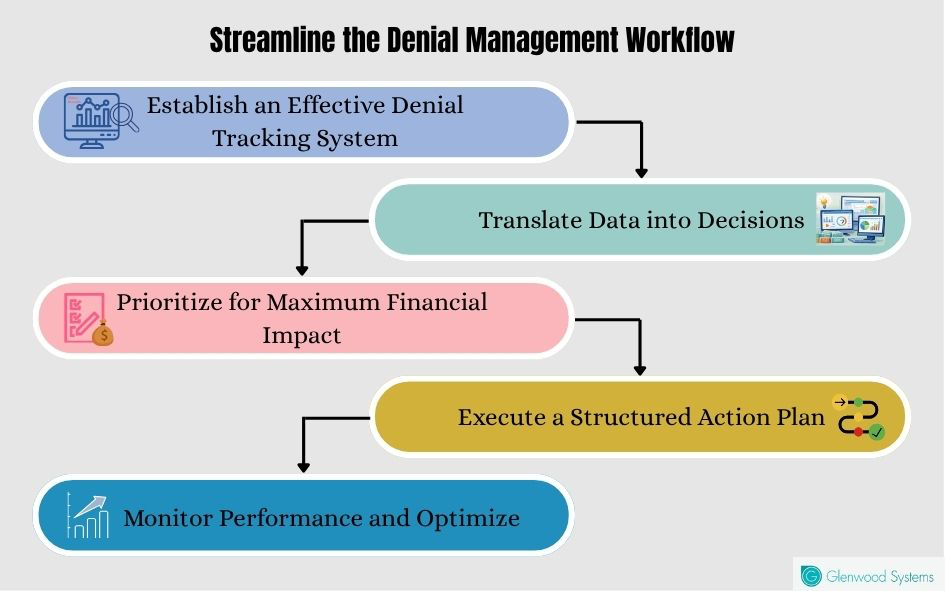
Establish an Effective Denial Tracking System
The first step in denial management is visibility. Understanding where denials occur across the revenue cycle is essential, and AI makes this easy.
An effective denial tracking system should include:
Automated Denial Capture
- Pull denial data directly from ERAs (Electronic Remittance Advice) and EOBs
- Eliminate manual logging to prevent errors and delays
- Tag every denial with:
- Payer
- Claim Adjustment Reason Codes (CARC/RARC)
- Dollar value
Proactive Deadline Management
- Set up alerts for timely filing limits and deadlines for appeals.
- Maintain payer-specific timelines to ensure timely filing.
- Use work queues or aging dashboards to flag claims nearing deadlines.
Translate Data into Decisions
Once you have the data, the real question becomes: What is it telling you? Because denial data, on its own, doesn’t solve anything. Its value lies in how effectively you interpret, translate, and act on it.
The goal is to turn raw denial data into clear, actionable intelligence, so your team knows exactly what to fix, where to focus, and how to respond.
Here’s how to make that happen:
1) Automate CARC/RARC Categorization
Hundreds of denial codes scattered across spreadsheets can be overwhelming.
Organizing denial data by Claim Adjustment Reason Codes (CARC) and Remittance Advice Remark Codes (RARC) helps categorize denials into eligibility, authorization, coding, documentation, and medical necessity issues, making the data actionable.
2) Leverage Real-Time, Actionable Dashboards
Real-time RCM dashboards, like Glenwood Systems’ RCM dashboard, give you instant visibility into key metrics, including denial rates by payer, top denial reasons, financial impact, aging of denied claims, and appeal success rates. Instead of reacting later, you can spot trends early, identify bottlenecks, and intervene before issues escalate.
3) Segregate AR into buckets
Segmenting AR into clear buckets (0–30 days, 31–60 days, 61–90 days, and 90+ days) gives you clarity and helps:
- Identify claims that need immediate follow-up
- Spot delays early before they turn into write-offs
- Highlight denials that are nearing appeal deadlines
- Improve team efficiency
4) Assign Clear Ownership
Even with the right data, ownership ambiguity can stall the resolution of denials. Assign a specific owner for each denial type: eligibility issues to the front desk, coding errors to coders, documentation gaps to clinicians, and appeals to the billing team. Clear accountability reduces delays and ensures faster resolution.
Prioritize for Maximum Financial Impact
An effective denial management strategy is to prioritize and resolve denials before deadlines expire. Focus on denials that offer the greatest reimbursement opportunity. Here’s how:
- Dollar value: target claims above your recovery threshold
- Appeal deadline: work time-sensitive claims first
- Overturn probability: focus on eligibility, coding, and documentation (often 50–80% recoverable)
- Payer patterns: prioritize payers with high overturn rates
- Repeat issues: address root causes driving multiple denials
Execute a Structured Action Plan
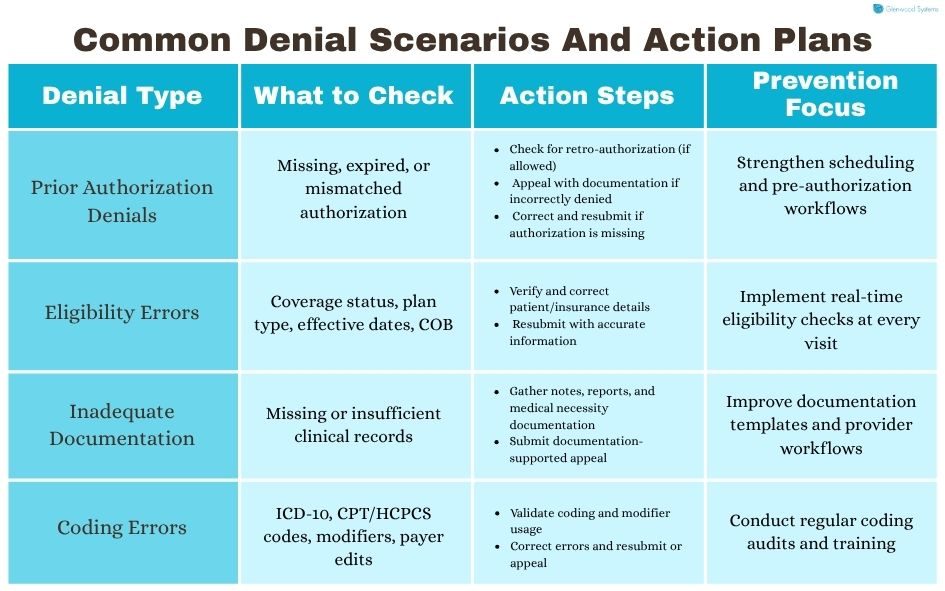
Once priorities are established, consistent execution becomes critical. Replace ad hoc follow-ups with standardized resolution and appeal workflows that define clear responsibilities, timelines, and documentation requirements.
Let’s look at a few common denial scenarios and the corresponding action plan:
Monitor Performance and Optimize
You’ve tracked, categorized, and addressed your denials, but if the process ends there, you’re missing opportunities for improvement.
Optimization demands ongoing performance monitoring and process refinement. Focus on these key metrics:
- Denial overturn rate: how often appeals are successful
- Appeal rate: whether you’re pursuing the right denials
- Average days to resolve: how quickly denials are being worked on
- Write-off rate: how much revenue is being lost
Simultaneously, look beyond the numbers to identify patterns and guide your next steps.
- High overturn rates → focus on prevention to reduce volume while maintaining recovery
- Low success rates → reassess the appeal process, identify the issue, and address it
- Delays in resolution → identify workflow bottlenecks
- Frequent write-offs → trace back to root causes and fix upstream issues
Over time, this creates a feedback-driven system where your denial management process becomes more precise, efficient, and effective.
A Smarter Approach to Denial Management with Glenwood
Many providers today feel that AI has contributed to the rise in denials, and there’s some truth to that. Payers are increasingly using AI-driven systems to review, flag, and adjudicate claims more aggressively than ever before.
But that also means providers can leverage the same technology to their advantage.
GlaceRCM, Glenwood Systems’ AI-powered denial management tool, automates denial tracking, identifies patterns, and prioritizes high-impact claims to ensure 99%+ collections.
Denials aren’t going away, but how you manage them transforms your outcomes. Explore how AI-powered denial management streamlines your workflows, reduces rework, and helps you recover maximum revenue.