Have you ever bought something, only to learn later that someone else got it for a much better price? That sinking feeling is heartbreaking.
The same thing happens with payer contracts. Many providers sign agreements that seem reasonable, only to discover months later that reimbursement falls short, denials rise, and margins shrink.
In this blog, we break down payer contract negotiation mistakes providers often make and how to avoid unfavorable agreements.
Payer contract agreements are layered with complex terms, dense language, and “standard” clauses that can confuse even experienced providers. You don’t need to be a legal expert to navigate them, but you do need to know where to look and what questions to ask.
Below are seven mistakes to avoid in payer contract negotiations.
This is the most expensive myth in payer contracting. While payers may not negotiate every clause, most contracts include elements that are open to discussion.
Approach every contract discussion expecting that terms are negotiable, and align negotiations with your operational needs and long-term goals.
Another common mistake is limiting contract negotiations to reimbursement rates alone. Rates matter, but they’re not the whole story.
Many practices celebrate a 2–3% rate increase, only to discover net collections decline due to:
For effective negotiation, address:
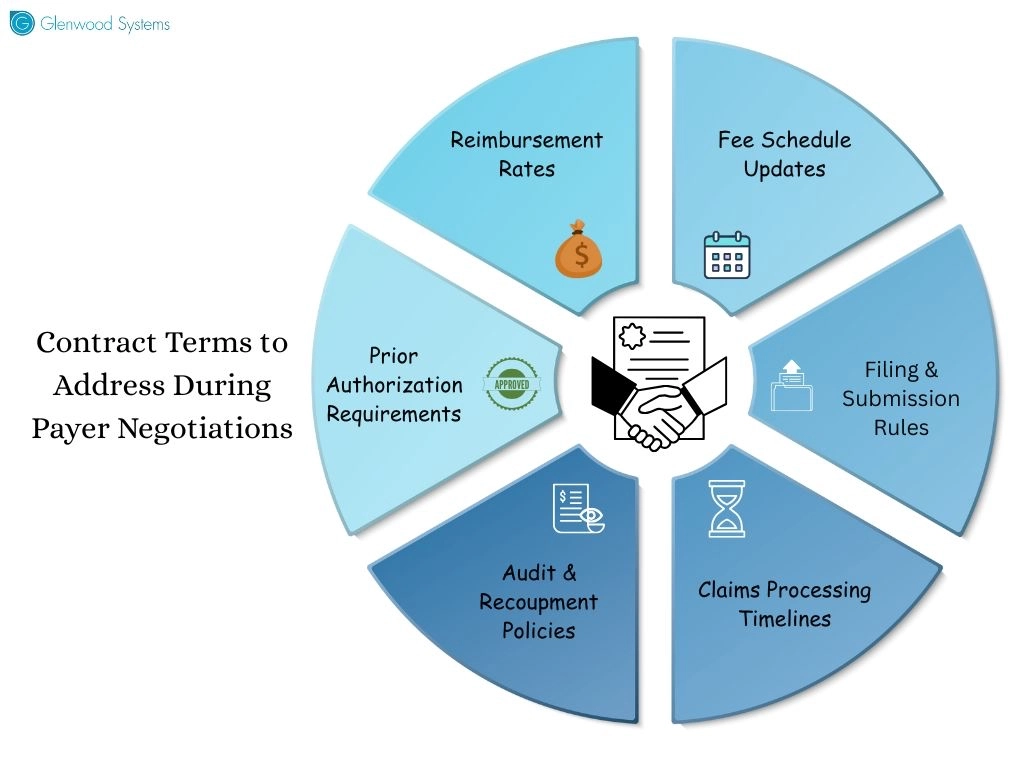
Key Contract Negotiation Terms
Even when rate increases are limited, non-rate concessions deliver meaningful financial and operational gains.
Entering negotiation without supporting data puts you at an immediate disadvantage. Payers come armed with utilization trends, cost benchmarks, and market comparisons, so you should come prepared with your own insights.
Even basic internal insights, such as your top 20 CPT codes by payer, can create meaningful leverage. At a minimum, be prepared with:
The TiC (Transparency in Coverage) data provides valuable information to benchmark contracts and support negotiations with market-based evidence. Yet, only about 18% of medical groups use TiC data in contract negotiations.
Reimbursement rates may be bolded, but the real risks are usually buried in the fine print.
Common payer contract red flags to watch for include:
Meticulously review contracts to identify provisions that may work against your interests. If any clause is unclear, seek clarification, request revisions, and document all verbal assurances before signing.
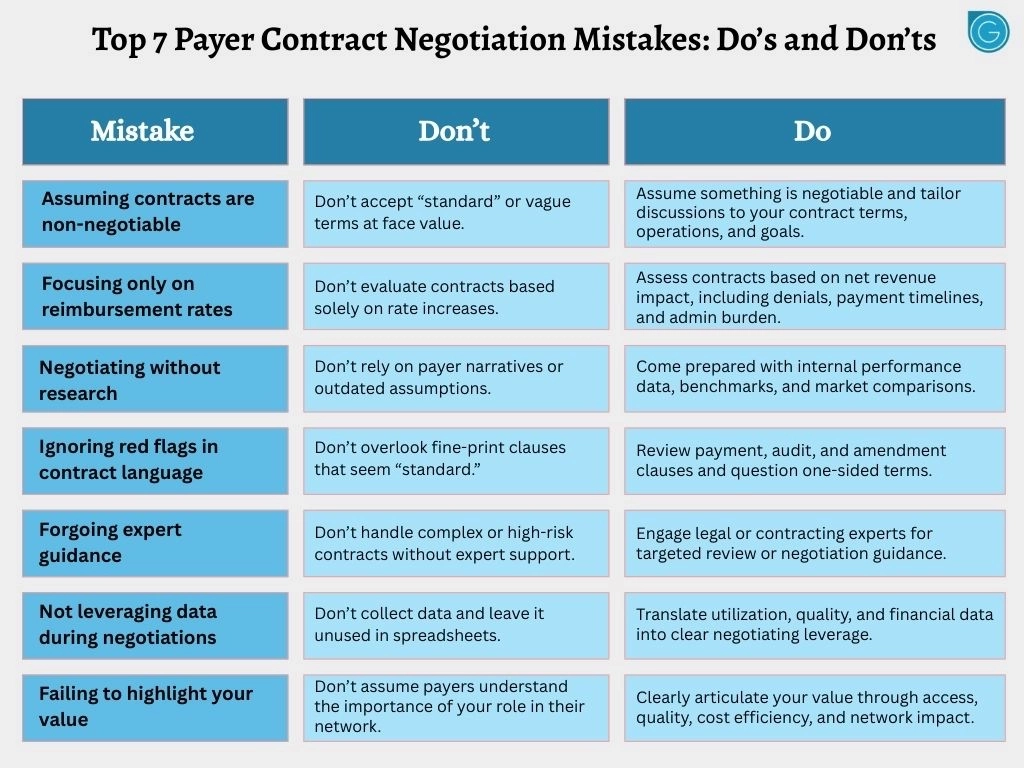
Do's and Don'ts of Contract Negotiation
Payer contracts involve nuanced legal provisions that require careful interpretation.
Despite this, many organizations fail to seek expert advice, considering it an added cost, only to find it expensive once revenue leakage, underpayments, or compliance issues surface.
Expert support is especially valuable in situations such as:
Data is your strongest leverage in negotiations, but only when tied to payer priorities: access, cost control, quality, and member satisfaction.
One of the most powerful data points is your share of the payer’s network volume, which highlights your role in meeting member demand and maintaining adequate network coverage.
Support your case with quality and outcomes data, including readmission rates, patient satisfaction scores, and clinical outcomes, to reinforce your value as a high-performing provider.
Many contract negotiations stall because providers fail to communicate their value.
Develop a compelling value narrative, supported by visual reports, to demonstrate your practice’s importance within the payer’s network.
A strong pitch should highlight:
Framing these elements cohesively positions your medical practice as a strategic asset.
Payer contracts are long-term financial commitments that shape revenue, operations, and growth. The most costly mistakes stem from rushed decisions, unchecked assumptions, and missed opportunities.
When you bring the right data to the table, clearly articulate your value, and take the time to question “standard” terms, payer negotiations stop feeling like a necessary headache. They become a strategic opportunity.
Schedule a Free Consultation!


