Physician burnout has decreased by nearly 18% from its peak. Yet, nearly half of physicians still report burnout.
Ironically, burnout is still often framed as a resilience issue, when in reality, it's a system-level challenge.
Poorly designed workflows divert physicians from patient care. The solution is a system-level redesign that removes friction and restores clinical focus.
Let's discuss the impact of physician burnout and how to mitigate it.
Physician burnout extends far beyond staffing challenges; it's a threat to patient safety and financial stability. Here's a deep dive:
Physician burnout doesn’t happen in isolation; its impact is reflected in patient outcomes.
A landmark meta-analysis found that burnout negatively impacts care.
Here are the specifics:
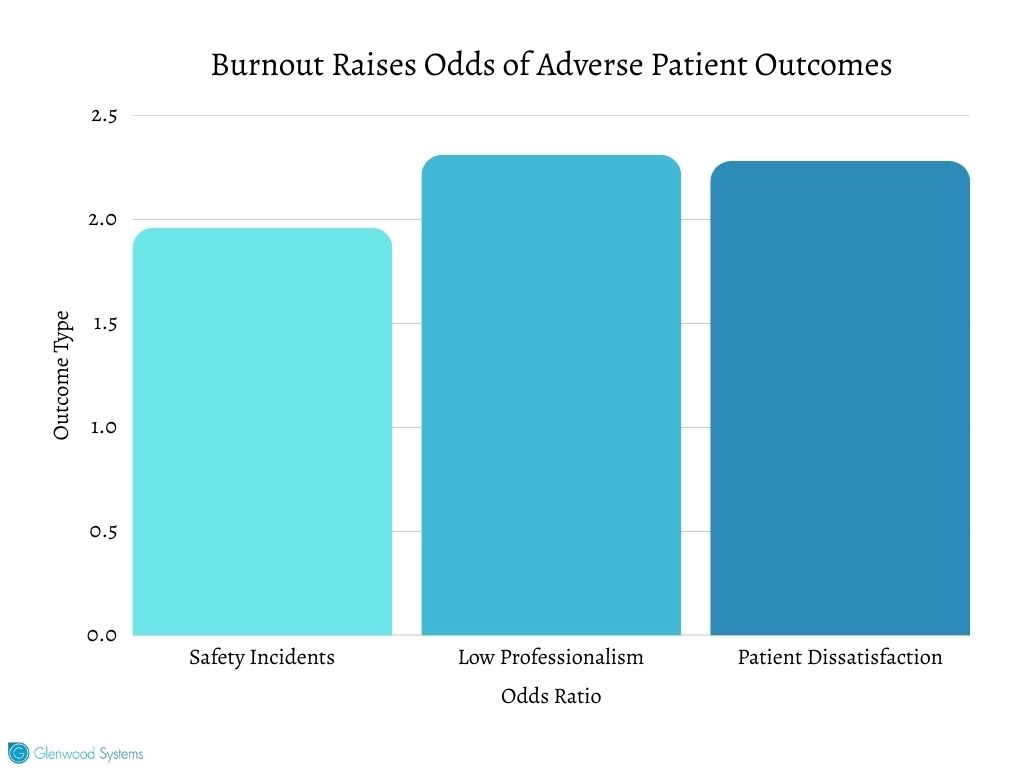
Burnout Impact on Patient Outcomes
Overburdened physicians spend less time engaging with patients, making interactions feel rushed. Over time, these small breakdowns weaken trust, leading to non-compliance that impacts health outcomes.
A study found that higher daily burnout levels, typically above 35, were associated with longer patient wait times.
Replacing a physician can cost 2–3 times their annual salary, with total replacement costs ranging from $800,000 to $1.3 million per physician.
Beyond these direct expenses, organizations also incur indirect losses, including reduced access, lower patient satisfaction, care delays, and strained staff. As burnout spreads, turnover accelerates, creating a vicious cycle that further destabilizes teams.
Burnout is often the result of inefficient systems and workflows. Below are three practical, system-level strategies that make a difference.
The simplest way to reduce burnout is to stop asking physicians to do work that doesn’t require their expertise.
Delegate tasks that don’t require a physician’s judgment to nurses or medical assistants. Here are some examples:
Addressing EHR-driven burnout comes down to four core levers:
1. Eliminate Unnecessary EHR Work
Eliminate work that adds no clinical value. Here's how:
Every unnecessary click you remove reduces cognitive load and saves time.
2. Share EHR Work
Build team-based inbox workflows where:
Similarly, delegate documentation to PAs or virtual assistants.
3. Make EHR Efficient
Once work is right-sized and shared, optimize the system.
4. Train for Efficiency
Move beyond basic onboarding with role-specific training that focuses on shortcuts, filters, bulk actions, and smart phrase design to reduce documentation time. Additionally, use sandbox environments or simulations for 1:1 coaching.
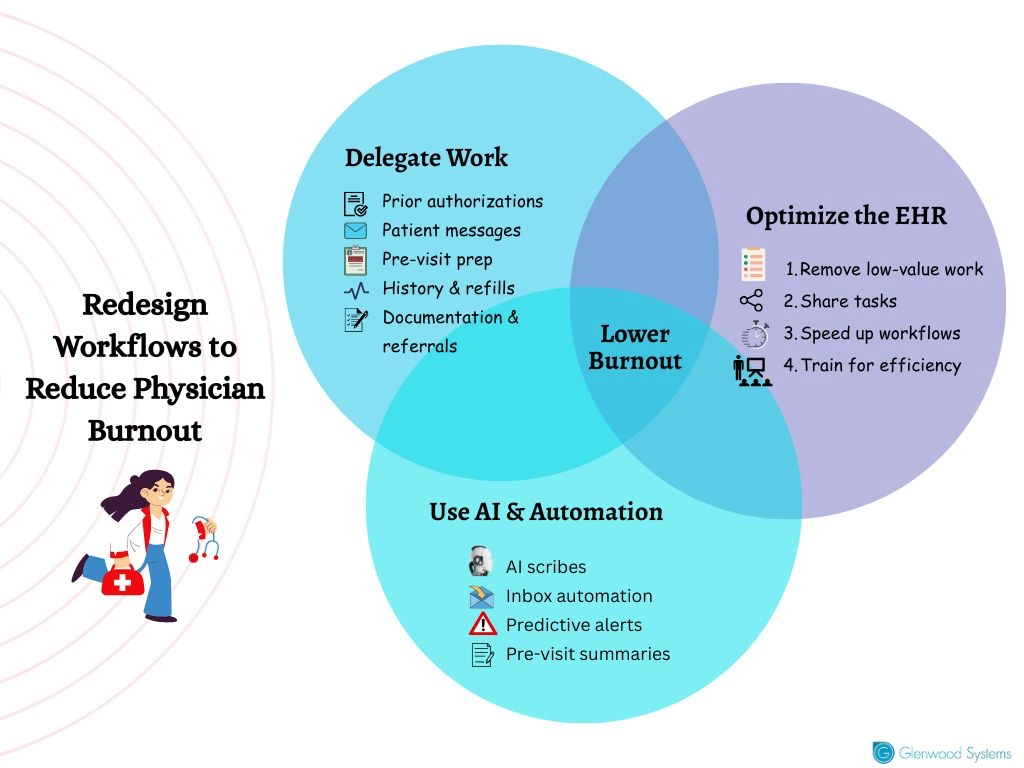
Redesigning Workflows to Alleviate Physician Burden
Used efficiently, AI removes administrative burdens; deployed poorly, it can create additional friction.
Here's how thoughtful AI implementation supports physicians:
Burnout is the predictable outcome of inefficient workflows. It’s time to move beyond traditional workflows and adopt intelligent designs.
Glenwoodm System’s intelligent automation tools (GlaceEMR, GlaceRCM, GlaceScribe, and more) simplify documentation, enable precise and efficient coding, and automate repetitive administrative tasks. It integrates seamlessly with existing EHR systems and takes clerical weight off physicians’ shoulders.
Tired of systems that drain your time and energy? Let’s redesign workflows that actually work for you and your team.
Schedule a Free Consultation!


