Every thriving medical practice shares the same ingredients: loyal patients, excellent care, a well-balanced team, and strong financial performance. But if you have a strong patient base, staffing often becomes the deciding factor that can either drive your outcomes and profits upward or leave you battling thin margins.
Too many staff and payroll expenses quietly chip away at your bottom line month after month. Too few, and you risk slower patient flow, increased staff burnout, longer wait times, and missed revenue opportunities.
Patient outcomes depend on the proper clinical support, operational efficiency hinges on the right people in the right roles, and profitability rests on striking the perfect balance between payroll costs and productivity.
In short, whether your practice thrives or struggles financially often comes down to one question: Are you overstaffed, understaffed, or right-sized?
Let’s explore why workforce optimization matters, how to assess whether you’re overstaffed or right-sized, and a practical plan to optimize staffing without compromising patient care.
The essence of healthcare is to meet patients' medical needs, ease pain, and improve quality of life. In your medical practice, it’s your team that brings that mission to life and keeps your business thriving.
Optimal staffing is one of the most powerful levers you have to influence your practice’s success. It impacts three core areas:
A limited workforce strains your team, especially when demand is high, fueling burnout that leads to early departures and reduced clinical hours, both of which result in significant losses. While physician burnout rates have declined since the pandemic, they remain higher than those of the general working population. That’s why cutting headcount without addressing burnout isn’t just risky, it can backfire.
The AMGA’s 2024 Medical Clinic Staffing Survey reports that the median total clinic staff is about 2.15 full-time equivalents (FTEs) per provider FTE across specialties and group sizes. While this is a critical benchmark, it’s far from a one-size-fits-all formula.
Your ideal staffing sweet spot depends on factors such as patient volume, rural/urban setting, the types of services you offer, your tech stack, workflow efficiency, and, most importantly, your practice goals.
If growth is on your horizon, your team should reflect the demand you anticipate, even if that occasionally means appearing “overstaffed” during slower periods. The key is to align with today’s needs and gear up for tomorrow’s goals.
Here’s how to spot the red flags of overstaffing or understaffing before they start hurting your bottom line or patient care.
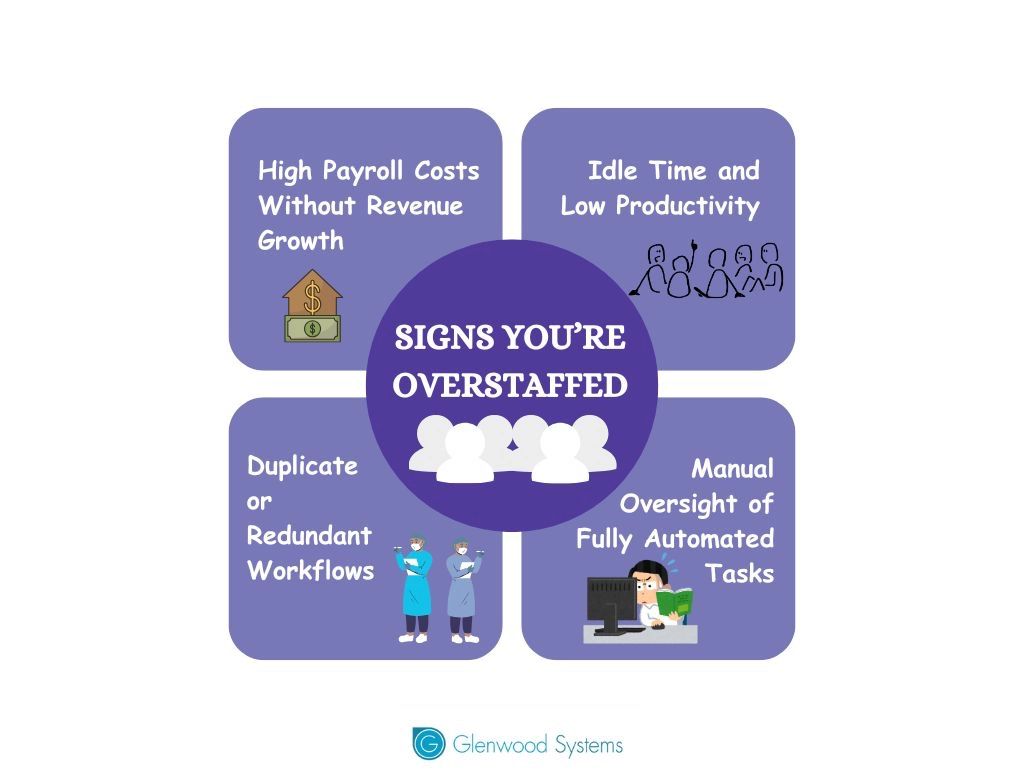
If your team’s capacity regularly exceeds the actual workload, you’re likely overstaffed. This scenario often stems from overestimating growth or failing to adjust after a drop in patient volume.
Watch for these red flags that signal that your practice may be overstaffed:
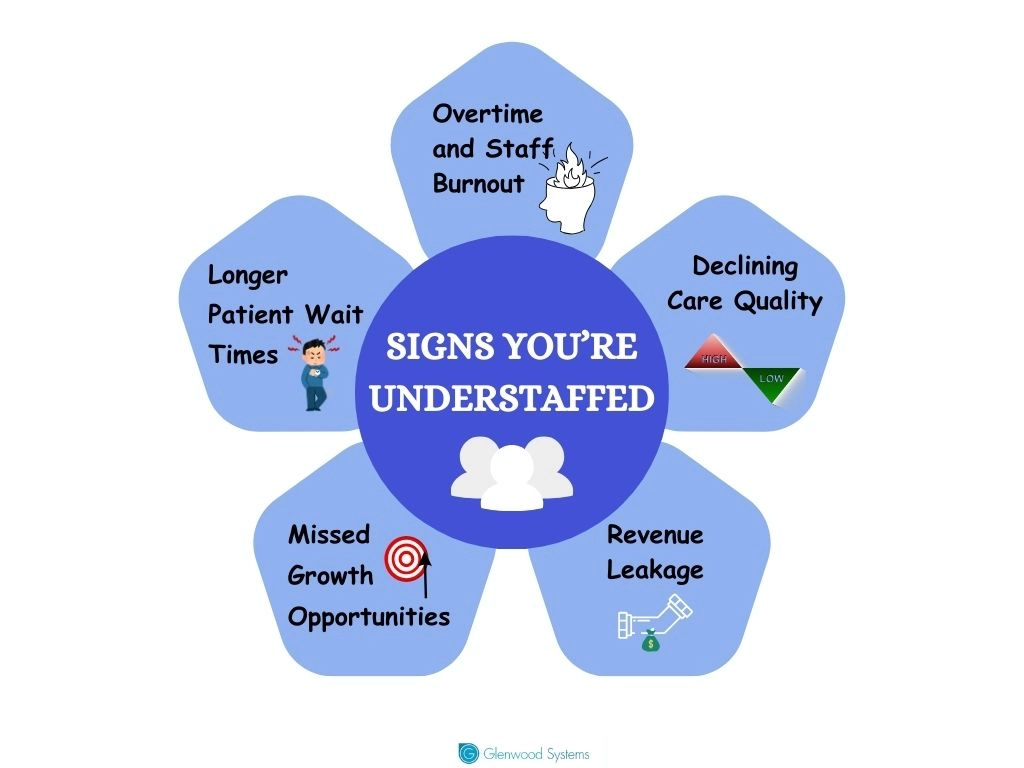
If your team is constantly struggling to keep up with the workload, you’re likely understaffed. This scenario can stem from unexpected growth, seasonal surges, or a lack of recruitment to replace departing staff. Being shorthanded can impact efficiency, affect patient satisfaction, staff morale, and revenue. Common red flags include:
Now that you’ve figured out whether your practice is running too lean, too heavy, or somewhere in between, the solution isn’t as simple as bringing in more hands or showing some the door.
If you want better efficiency, higher productivity, and improved profit margins, staffing has to be more than a numbers game. Fine-tune your team so every role, skill, and resource perfectly fit to meet your patient load, workflows, and growth goals. Get the balance right, and your practice runs like a well-oiled machine. Here's how:
Don’t let job titles become silos. Train medical assistants (MAs) and front-desk staff to handle a broader range of tasks so they can float between clinical and administrative duties. This cross-training keeps the day running smoothly, even when someone’s out sick. Studies show that cross-training improves teamwork, enhances role flexibility, and helps practices maintain smooth operations during peak demand.
Free up physicians, RNs, and NPs from routine administrative tasks by delegating them to trained MAs, LPNs, virtual assistants, or support staff. For example, instead of having a physician spend 20 minutes tracking down prior authorization forms, a medical assistant can gather the necessary documentation, submit it, and follow up.
Similarly, route test results, prescription refills, and appointment scheduling to support staff or manage them through your EHR’s team inbox for faster turnaround and less clinician downtime.
Technology is your best bet for unlocking workforce efficiency and elevating patient satisfaction. Patients today expect quick responses and value convenience more than ever. Meeting those expectations takes more hands, but constantly hiring isn’t a sustainable fix. Technology can be that extra set of hands, helping you deliver faster, better care without stretching your budget.
Advanced tech that makes the patient journey smoother:
The less time your team spends on routine admin work, the more energy they can devote to patient care.
Outfit your practice with:
Customize appointment templates that reflect realistic time blocks for each type of visit, such as new patient visits, follow-ups, and procedures, so your day runs on time without feeling rushed.
Use your EHR or scheduling software to flag and fill gaps. For cancellations, have a backfill strategy in place, like a waitlist or automated alerts to patients who’ve requested earlier appointments. Additionally, consider clustering similar appointment types to reduce setup time and boost efficiency. Every filled slot means less lost revenue and a smoother patient flow.
Not every task fits naturally within your team’s scope; some run smoothly in-house, while others eat up time and resources without moving the needle. Take billing, prior authorization, or credentialing; hiring and training staff for these tasks is expensive.
Outsourcing can be a smart strategic move. It gives you access to specialized expertise, faster turnaround times, and built-in compliance checks. It also mitigates claim errors, ensures smoother operations, and improves cash flow through efficient claim processing.
Physician turnover is expensive, with replacement costs ranging from 2 to 3 times a physician’s annual earnings. A clever way to protect that investment? Keep the talent you already have.
Implement the following practices:
When your team stays, so does the quality of care and the financial health of your practice. Retention builds trust, consistency, and the stability every thriving practice needs.
Running a practice means wearing a lot of hats, and some days, it can feel like you’re juggling them all while running a marathon. It’s the kind of pressure that can test even the best teams.
At Glenwood Systems, we make tough days easier to handle. Our advanced practice management solutions streamline every step of care delivery. Whether it’s GlaceEMR and GlaceRCM handling seamless record-keeping and billing, GlacePhoneSmart providing enhanced patient support and payment collection, or GlaceScribe enabling hands-free documentation, we take care of the time-consuming tasks that slow you down, so your team can work at maximum productivity.
Let’s lighten your load, so your practice can thrive without the overwhelm.
Schedule a Free Consultation!


