Is AI just hype?
If you look at the numbers, it’s tempting to think so. Many companies are pouring money into AI… only to see an average ROI of barely 6%. Not exactly the revolution everyone promised.
But here’s the real story:
The problem isn’t AI. It’s how organizations adopt, deploy, and optimize it.
AI doesn’t fail; AI strategies do.
And the gap is huge. According to an IBM report, best-in-class companies are earning nearly 13% ROI on AI projects, more than double the average organization's ROI. These leaders aren’t just experimenting; they’re integrating AI into workflows, redesigning processes, and relentlessly optimizing for value.
So the question isn’t “Is AI worth it?”
It’s “Are you using it the way high-ROI organizations do?”
Let’s break down why AI ROI is falling short and what it takes to turn hype into measurable impact.
You expected AI to transform care delivery: faster diagnoses, smoother patient experiences, streamlined workflows, and a more productive team.
However, in reality, many AI projects are exciting during presentations and pilots, yet barely move the needle once deployed.
Why does this disconnect happen?
It often comes down to a set of foundational gaps that quietly erode ROI and stall real progress:
Most organizations nail Phase 1: Experimentation: the demos, the pilots, the “look what this model can do.”
Some even leap straight into Phase 3: Scale, investing in platforms, licenses, and enterprise-wide rollouts.
But the real ROI?
That happens in the middle, the part most people skip:
Phase 2: Optimization.
It’s not flashy or glamorous, but it’s where AI moves from interesting to impactful.
Here’s what true optimization actually looks like:
Get crystal clear about what you want AI to achieve. If AI is already integrated into your workflows, take a step back and reassess those goals, because broad objectives like “improve efficiency” or “reduce workload” won’t give you measurable results.
Be specific:
Once your AI is live, you need to keep validating it. A live system isn’t automatically a reliable one.
Monitor key indicators such as:
For example, if you’re using an AI tool that flags coding errors, don’t just trust the alert. Verify whether those alerts are accurate and clinically relevant. This is especially important in healthcare, as coding guidelines and regulations continue to change.
AI delivers real value only when it fits seamlessly into day-to-day workflows.
Ensure your AI tools:
Interoperability is key. When AI communicates effortlessly with your EHR, billing platform, or documentation tools, users experience less friction, adoption rises, and the impact becomes immediate and measurable.
AI is only as strong as the data feeding it. If your data is inconsistent, incomplete, or locked away in silos, even the most advanced models will struggle to perform well. Optimizing your data pipeline means fixing quality issues, standardizing formats across systems, integrating missing data sources, and ensuring your AI receives clean, timely information; ideally, in real time or close to it. It also involves automating data ingestion wherever possible to reduce manual errors.
Having clear metrics helps you evaluate AI performance and pinpoint workflow bottlenecks. But what truly drives impact is choosing the right KPIs. When your KPIs align directly with your organizational goals, your AI initiatives stop being experimental and start delivering measurable, meaningful results.
Instead of focusing solely on technical metrics such as accuracy or response speed, select a broader set of indicators that capture operational, financial, and clinical outcomes.
Common KPIs to track include:
Your AI performs best when it continues to learn from the world as it looks today. In healthcare, this is especially critical: new diseases emerge, new treatments are introduced, medical codes are updated, patient volume shifts with the seasons, and regulations evolve constantly.
If your AI isn’t retrained or fine-tuned to reflect these changes, its performance will gradually decline, even if it worked perfectly at launch. Regular updates ensure the system adapts to new patterns, remains clinically relevant, and continues to deliver accurate, reliable results.
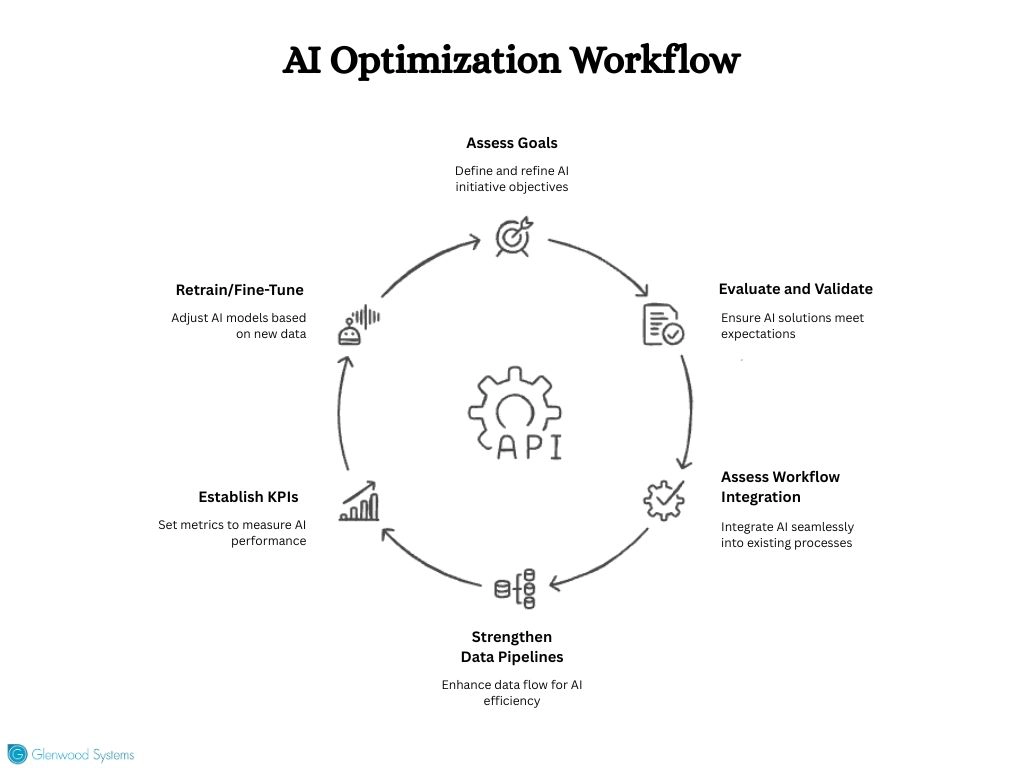
Workflow to Optimize AI Systems
AI optimization shouldn’t be reactive; it should be a routine part of your operations.
A quarterly review cycle helps keep your system sharp. Analyze usage and adoption trends, track performance, monitor error patterns, gather user feedback, and refresh training data. This rhythm ensures your AI evolves with time and delivers maximum ROI.
Measuring AI ROI in healthcare can feel tricky because the benefits span clinical, operational, financial, and experiential outcomes, many of which aren’t immediately quantifiable.
Here's a structured approach to calculate AI ROI in your practice:
First, identify all the costs involved in implementing and maintaining your AI systems. This includes both the one-time investments required to get the system up and running and the ongoing expenses needed to keep it performing reliably. Here’s a clear breakdown:
One-time costs may include:
Ongoing costs typically include:
Next, measure the value your AI system delivers. Use the KPIs you defined earlier and categorize the benefits clearly.
Tangible benefits are the ones you can assign a direct dollar value to, such as:
Intangible benefits may not have immediate dollar values, but they have significant long-term impacts. They include:
Once you have total costs and total benefits, plug them into a simple financial formula.
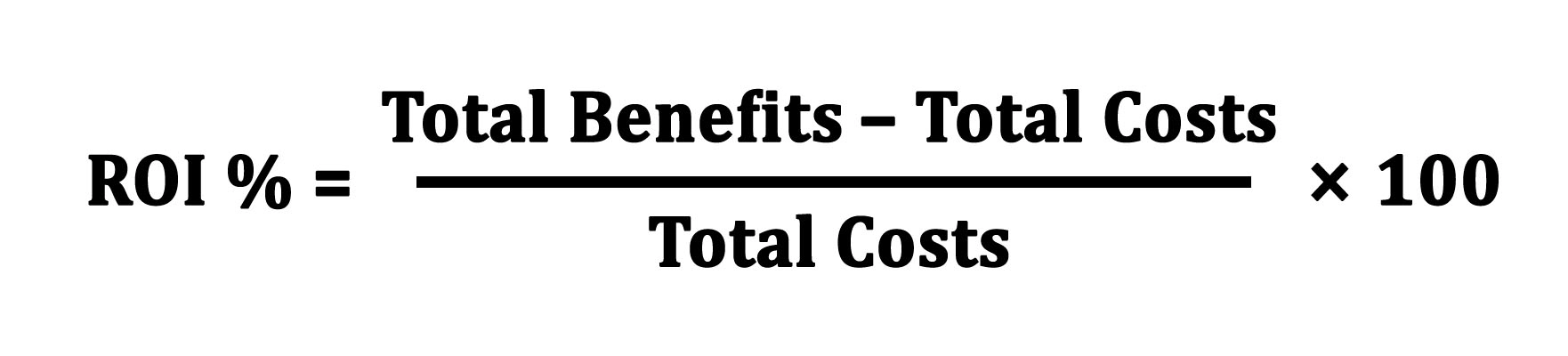
AI ROI
Let's take an example:
A small primary care practice with two providers adopts an AI documentation and coding assistant to reduce charting time and improve revenue capture.
Total Cost (Annual)
Total Costs = $10,000
Total Benefits (Annual)
Total Benefits = $11,200

Calculating your return on investment isn’t a one-time task. As you optimize your workflows, improve adoption, and refine your AI system, performance and ROI naturally improve.
To sustain and strengthen ROI:
Recalculating ROI periodically helps you track the true trajectory of your investment and uncover new opportunities to drive even greater value.
AI isn’t falling short; its management and optimization often are. When you align your goals, refine workflows, consistently monitor performance, and measure impact, AI becomes a dependable engine for efficiency, revenue growth, and improved patient outcomes.
At Glenwood Systems, we help practices unlock the true value of AI through our comprehensive suite of practice management tools: GlaceEMR, GlaceRCM, GlaceScribe, and more. With smarter EHR workflows, intelligent automation, seamless integrations, and data-driven optimization, your practice achieves higher productivity, reduced administrative burden, and improved revenue performance.
Want to build an ROI-focused AI strategy that truly works for your practice?
Let’s connect and make it happen.
Schedule a Free Consultation!


